
What Do Tariffs Mean for Canada? Latest Tariff News, Consumer Prices, and Canada–U.S. Trade Explained
By Careviv Editorial Team, Careviv
What the latest Canada tariff news actually means for Canadians: which Trump tariffs are in effect, which Canadian counter-tariffs were lifted, how prices, businesses, and CUSMA trade are being affected.
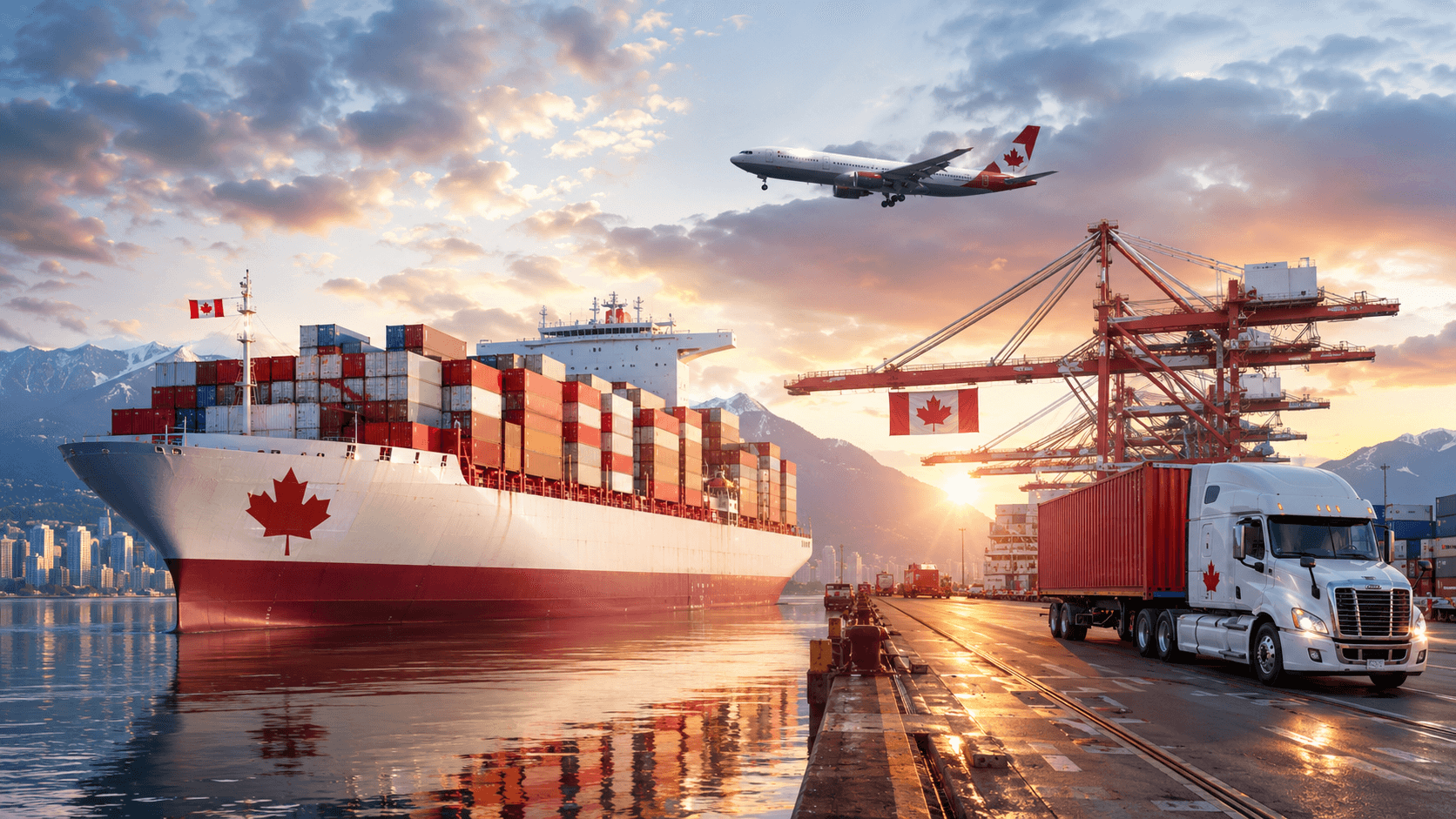
For most Canadians, "tariff news" used to sound like something reserved for trade lawyers, steel executives, or government officials in Ottawa and Washington. In 2025, that changed. Tariffs became a kitchen-table issue because they touched the price of cars, appliances, food inputs, construction materials, manufacturing costs, investment decisions, and even the way Canadian businesses think about their dependence on the United States. If you're following the latest tariff news in Canada and wondering "are tariffs in effect" or "when will tariffs start," this guide explains how tariffs are affecting Canada and what they mean for Canadians in practical, day-to-day terms. Some observers even describe the moment as a tariff war within a broader Canada trade war conversation.
The short version is this: tariffs are taxes on imported goods. But the real story is more complicated. A tariff does not simply punish a foreign country. It usually moves through supply chains, invoices, customs paperwork, business margins, consumer prices, and political negotiations. By the time it reaches an ordinary household or small business, the cost may appear as a higher price, a delayed order, a cancelled expansion, a thinner profit margin, or a product that is no longer available.
The recent Canada–U.S. tariff dispute matters because Canada and the United States are not distant trading partners — they are deeply integrated economies. According to the Office of the United States Trade Representative, U.S. goods and services trade with Canada totalled an estimated US$909.1 billion in 2024. Goods trade alone reached an estimated US$719.5 billion in 2025, with U.S. exports to Canada at US$336.5 billion and U.S. imports from Canada at US$383.0 billion.6
| Category | Goods trade (US$ billions) |
|---|---|
| U.S. exports to Canada | $337 |
| U.S. imports from Canada | $383 |
That means tariffs between Canada and the United States are not like tariffs between two countries with limited commercial ties. They are taxes placed on a shared production system, shaping the landscape of Canada–U.S. trade tariffs across integrated industries.
What tariffs are on Canada right now?
The most important thing to understand is that the 2025 tariff story had several layers.
- In early 2025, the United States imposed tariffs on Canadian goods, including a 25% tariff on many Canadian goods and a 10% tariff on Canadian energy and potash exports.5
- The U.S. also imposed tariffs on Canadian steel and aluminum products.10
- Canada responded with counter-tariffs on selected U.S. goods.3
- Canada later removed many of its counter-tariffs. Effective September 1, 2025, Canada removed 25% tariffs on certain U.S. goods, including $14.2 billion in goods that had been subject to tariffs since March 13, 2025, and $30 billion in goods that had been subject to tariffs since March 4, 2025. However, Canada kept tariffs on steel, aluminum, and automobiles in place.1[4]
This is why many people searching "what tariffs are on Canada right now" are confused. The answer depends on which product you are talking about. Many broad counter-tariffs have been removed, but strategic-sector tariffs remain highly relevant, especially for steel, aluminum, and autos. In short, tariffs on Canada today are narrower and concentrated in Canada–U.S. trade tariffs tied to these sectors.
| Product category | Tariff rate | Status |
|---|---|---|
| Canadian goods (non-CUSMA-compliant) | 25% | In effect |
| Canadian energy & potash exports | 10% | In effect |
| Canadian steel & aluminum products | Separate measure | In effect |
| Canadian autos & auto parts | Separate measure | In effect |
| CUSMA-compliant goods | 0% (qualifies) | Largely shielded |
| Counter-tariff tranche | Goods value (CAD) | Status (as of Sep 1, 2025) |
|---|---|---|
| Imposed March 4, 2025 | $30.0 billion | Lifted Sep 1, 2025 |
| Imposed March 13, 2025 | $14.2 billion | Lifted Sep 1, 2025 |
| Steel, aluminum, autos | — | Retained |
The Government of Canada's current position is that its remaining tariffs are focused on sectors it considers strategically important. In an August 2025 statement, the Prime Minister said Canada would retain tariffs on steel, aluminum, and autos while continuing discussions with the United States.4
Why did Trump put tariffs on Canada?
If you've been tracking the latest Trump news on tariffs against Canada, the "Trump tariff announcement," or a related "Trump Canada announcement," the official U.S. justification for the February 2025 tariffs was national security and border-related concerns. The White House stated that the tariffs were connected to an emergency involving illegal migration and fentanyl, and invoked the International Emergency Economic Powers Act.5[6] Many readers search "why is Trump putting tariffs on Canada" or "why does Trump want to impose tariffs on Canada," and, in related debates, "why is Trump putting tariffs on Canada and Mexico."
For Canadians, this explanation was controversial because Canada has historically been one of America's closest allies and trading partners. Canada is not just a supplier of consumer goods. It supplies energy, critical minerals, autos, aluminum, steel, agricultural products, lumber, and intermediate goods used by American manufacturers. Many Canadian exports are not finished products sitting on a shelf; they are inputs used to make other products in North America. Coverage often framed this as "Trump tariff Canada," "Donald Trump tariffs Canada," or even "Trump vs Canada," but the underlying economics are about integrated production.
That distinction matters. If the United States places a tariff on a Canadian input used by an American factory, the cost does not necessarily stay in Canada. It can raise costs for the U.S. manufacturer, which may then raise prices, reduce margins, change suppliers, or delay investment.
This is why tariff policy often creates unintended consequences. It may be designed as leverage against another country, but in integrated supply chains, the burden is frequently shared.
What does a 25% tariff mean for Canada?
A 25% tariff means that an importer may have to pay an additional 25% tax on the customs value of a product when it crosses the border. If a Canadian-made product worth $10,000 is imported into the United States and subject to a 25% tariff, the tariff cost could be $2,500 before considering other fees, exchange rates, logistics, or contractual arrangements. In other words, it answers the common question, "what does the 25% tariff mean for Canada?"
But the economic effect depends on who absorbs the cost.
- Sometimes the exporter cuts its price to remain competitive.
- Sometimes the importer absorbs the cost temporarily.
- Sometimes the cost is passed to consumers.
- Often, the cost is shared across the supply chain.
For Canadian businesses, the biggest damage may not be the tariff rate itself, but uncertainty. A company can plan around a known tax. It is much harder to plan around changing rules, exemptions, pauses, retaliatory measures, remission programs, and political announcements.
Statistics Canada reported that in the third quarter of 2025, one-quarter of businesses said they had passed tariff-related cost increases to customers over the previous six months. Nearly two-fifths, or 39.4%, said they were very likely or somewhat likely to pass those costs on over the next 12 months.11
| Category | Share of Canadian businesses |
|---|---|
| Already passed costs on (prior 6 months) | 25% |
| Likely to pass costs on (next 12 months) | 39.4% |
That is one of the clearest numbers for consumers: tariffs do not always raise prices immediately, but they create cost pressure that businesses eventually have to manage.
How do tariffs affect Canadians?
For households, tariffs usually show up indirectly. In practical terms — how do tariffs affect Canada and how will the tariffs affect Canadians — the impact is most visible in prices and availability.
- A Canadian consumer may not see a receipt that says "tariff surcharge."
- Instead, the price of a fridge, car, renovation material, packaged food, tool, or household good may simply rise.
- Retailers may also reduce discounts, substitute suppliers, or stop carrying certain products.
The Bank of Canada has studied how tariffs move into consumer prices. In its October 2025 Monetary Policy Report, the Bank noted that Canadian counter-tariffs on U.S. imports were pushing up costs and inflation. It estimated that counter-tariffs had raised the price level by about 0.3% so far, with the peak impact on the Consumer Price Index projected at around 0.4% in the first quarter of 2026.7[8]
| Category | CPI impact (percentage points) |
|---|---|
| Current impact (Oct 2025) | 0.3% |
| Projected peak (Q1 2026) | 0.4% |
At first glance, 0.3% or 0.4% may sound small. Across a national economy, that change affects millions of purchases. For households already facing higher housing, food or borrowing costs, even modest price increases can matter.
The Bank of Canada also reported that the Canadian economy was adjusting to steep U.S. tariffs on several industries, and that tariffs had reduced demand for Canadian goods while increasing costs through changes in global trade and domestic production.8
So the effect is two-sided. Tariffs can make some goods more expensive, while also weakening demand for Canadian exports.
Why tariff news matters for Canadian businesses
Businesses are affected in different ways depending on their sector.
- A retailer importing U.S. products into Canada may face higher costs if those goods are still subject to Canadian counter-tariffs.
- A Canadian manufacturer exporting to the United States may face reduced demand if American buyers are unwilling to absorb tariff costs.
- A construction company may see higher input costs if steel, aluminum, or related materials become more expensive.
- An auto supplier may face pressure from both sides because the North American auto industry is deeply integrated across Canada, the United States, and Mexico.
For small businesses, the greatest challenge is often administrative. Tariffs are not just a macroeconomic event. They create paperwork, classification questions, customs risk, sourcing decisions, and pricing decisions. A business has to ask:
- Is this product covered?
- Is there an exemption?
- Is there a remission process?
- Is the product compliant under CUSMA?
- Can we switch suppliers?
- If we raise prices, will customers leave?
For many firms, these realities are what people mean when they ask "how does Trump affect Canada" in day-to-day operations.
Canada introduced remission and relief measures for certain businesses affected by the tariff dispute. The Canada Border Services Agency described remission relief for goods used in Canadian manufacturing, processing, food and beverage packaging, and goods supporting public health, health care, public safety, and national security objectives.12
That relief matters, but it also shows the complexity of the situation. If tariffs were simple, governments would not need detailed remission programs to prevent collateral damage.
The CUSMA factor: why not all goods are treated the same
One reason the Canada tariff story is difficult to follow is that the Canada–United States–Mexico Agreement, known as CUSMA in Canada and USMCA in the United States, changes the treatment of many goods.
Statistics Canada noted that in early 2025, the United States imposed 25% tariffs on goods entering the United States from Canada that were not compliant with CUSMA, along with 10% tariffs on Canadian energy product exports and separate tariffs on Canadian steel and aluminum.10
This distinction is critical. A product's tariff exposure may depend on whether it qualifies under rules of origin. That means businesses need to understand not only where a product was shipped from, but where its components came from and whether it satisfies the agreement's requirements. This has become even more salient amid coverage of "Canada–U.S. trade talks Trump tariffs," where compliance and documentation can materially change outcomes.
For large companies, this is a compliance issue. For small businesses, it can be a serious operational burden.
Are tariffs good or bad for Canada?
The honest answer is that tariffs can protect certain industries in the short term, but they also create broad economic costs.
Supporters of tariffs argue that they can protect domestic workers, defend strategic sectors, and create negotiating leverage. In Canada's case, keeping counter-tariffs on steel, aluminum, and autos is partly about defending industries that are central to the country's manufacturing base.
Critics argue that tariffs raise costs, reduce efficiency, invite retaliation, and make businesses less competitive. A tariff may protect one producer while raising costs for five other companies that use that producer's materials.
For Canada, the strategic problem is dependence. Canada benefits enormously from access to the U.S. market, but that access also creates vulnerability. When U.S. trade policy changes suddenly, Canadian businesses have limited time to adjust. For many readers asking "what will the tariffs mean for Canada," the answer often depends on sector, exposure, and timing.
This is why the tariff debate is also becoming a debate about economic resilience. Canada has to decide whether it can continue relying so heavily on one export market, or whether it needs to build more trade capacity with Europe, Asia, and other partners.
How tariff updates affect consumer prices
The most direct consumer impact comes through imported goods. If a tariff applies to a product imported from the United States, the importer's cost rises. The business then decides whether to absorb the cost or pass it on.
However, consumer pricing is not always immediate. Retailers may have existing inventory purchased before tariffs took effect. They may have contracts that delay price changes. They may choose to absorb costs for competitive reasons. Or they may raise prices only when replacement inventory arrives.
Bank of Canada research on tariff pass-through found that Canada's 2018 counter-tariffs resulted in high but incomplete pass-through to consumer goods prices. The speed and size of price increases varied across products.9
That history is useful for understanding the current dispute. Tariffs do not instantly translate into identical price increases at the checkout counter. A 25% tariff does not always mean a 25% price increase for consumers. But it does create upward pressure.
Over time, repeated tariff uncertainty can also change business behaviour. Companies may hold more inventory, diversify suppliers, use less efficient sourcing, or delay investment. Those decisions can raise costs even after a specific tariff is removed.
Why the Canada–U.S. tariff war is different from ordinary trade disputes
There have always been trade disagreements between Canada and the United States. Softwood lumber is the classic example. But the 2025 tariff dispute was different because of its breadth and political intensity.
It affected goods far beyond one narrow sector. It also arrived at a moment when global trade was already being reshaped by geopolitical risk, supply-chain diversification, energy security, and industrial policy.
Canada's economy is not built for sudden trade separation from the United States. The two countries share supply chains, infrastructure, investment flows, labour-market links, and regulatory relationships.
- In autos, parts may cross borders multiple times before a final vehicle is assembled.
- In energy, pipelines and refineries are physically connected.
- In agriculture and food, producers often depend on cross-border inputs and buyers.
That is why tariffs between Canada and the United States can feel economically unnatural. They do not simply separate two markets. They interfere with a system that was designed to work as one continental market, which is why many describe this period as a "tariff war" within a broader discussion of a Canada trade war.
What businesses should watch next
For businesses, the key issue is not only whether tariffs exist today, but whether tariff risk becomes permanent. There are several things to monitor.
- Remaining Canadian counter-tariffs. As of the latest Government of Canada update, many counter-tariffs have been removed, but steel, aluminum, and automobile tariffs remain. Watch any potential tariff pause or new announcements that could change timing and scope.
- CUSMA compliance. If a product can qualify under CUSMA rules, its tariff treatment may be very different from a non-compliant product.
- Remission programs and relief measures. These can materially change the actual cost of tariffs for manufacturers, processors, health-related entities, and other eligible organizations.
- Customer behaviour. If customers are already price-sensitive, even a modest tariff-driven increase may reduce demand.
- Broader political direction. Tariffs are now part of a larger conversation about national security, industrial strategy, and economic sovereignty. Trade policy may remain volatile even when specific disputes cool down.
What Canadians should understand
The central lesson from the recent tariff news is that Canada's prosperity depends heavily on predictable trade.
Tariffs are sometimes presented as a simple contest: one country taxes another, and the other side loses. In practice, the burden is distributed across firms, workers, consumers, investors, and governments. Some sectors may gain short-term protection. Others may suffer from higher input costs or lost export competitiveness.
For Canadians, the practical question is not whether tariffs are "good" or "bad" in the abstract. The better question is: who pays, who benefits, and what changes over time?
If tariffs push Canada to strengthen strategic industries, diversify trade, and build more resilient supply chains, there may be a long-term policy argument behind the short-term pain. But if tariffs simply raise prices, delay investment, and create uncertainty, the cost will be felt widely.
The most likely reality is mixed. Canada will continue defending key sectors, businesses will continue adapting, and consumers will continue feeling some price pressure in tariff-exposed categories. The Canada–U.S. relationship remains too large to abandon, but too vulnerable to take for granted.
In that sense, tariff news is not just trade news. It is a warning about how dependent modern economies are on rules, trust, and stability. For more Canadian economic context, see Careviv's related coverage on the blog.
Q&A
Which tariffs are currently active between Canada and the United States?
What does a 25% tariff mean in practice — who actually pays?
How will tariffs show up for Canadian consumers and inflation?
How does CUSMA/USMCA status change whether a product faces tariffs?
What should Canadian businesses watch next?
References
- 1.Government of Canada — Canada's response to U.S. tariffs on Canadian goods.
- 2.Government of Canada — Complete list of U.S. products subject to counter tariffs.
- 3.Prime Minister of Canada — Canada announces new countermeasures in response to tariffs from the United States.
- 4.Prime Minister of Canada — Statement by the Prime Minister on Canada–U.S. trade (August 22, 2025).
- 5.The White House — Fact Sheet: President Donald J. Trump imposes tariffs on imports from Canada, Mexico and China.
- 6.The White House — Imposing duties to address the flow of illicit drugs across the national border.
- 7.Office of the United States Trade Representative — Canada trade summary.
- 8.Bank of Canada — Monetary Policy Report, October 2025.
- 9.Bank of Canada — Shifts in cost pressures (MPR, October 2025).
- 10.Bank of Canada — Assessing tariff pass-through to consumer prices in Canada.
- 11.Statistics Canada — Research to Insights: Canada's Economy During Recent Trade Disruptions.
- 12.Statistics Canada — Impact of tariffs on businesses in Canada.
- 13.Canada Border Services Agency — Customs Notice 25-19: United States Surtax Remission Order.
Related Blogs

Physician Site Visit Checklist for BC Clinics and Doctors
Plan a physician site visit in BC with clear clinic questions, expense terms, community checks and a non-clinical visit plan.
Read More
Physician Interview Questions for Canadian Clinics
Ten job-related physician interview questions, the evidence to listen for, and a consistent way to record what is known, unverified and still unanswered.
Read More
PharmaNet BC access: PRIME registration for physicians
Plan individual PRIME enrolment, community clinic registration and local account setup before using PharmaNet in a BC practice.
Read More
CMPA membership: application and clinic start checklist
Prepare your CMPA application, confirm the work and effective date, and organize suitable proof for a clear handoff with your Canadian clinic.
Read More