
Understanding the Capital of Canada: Ottawa
By Careviv Editorial Team, Careviv
Discover why Ottawa is the capital of Canada, how it was chosen, and what makes it the political heart of the country.
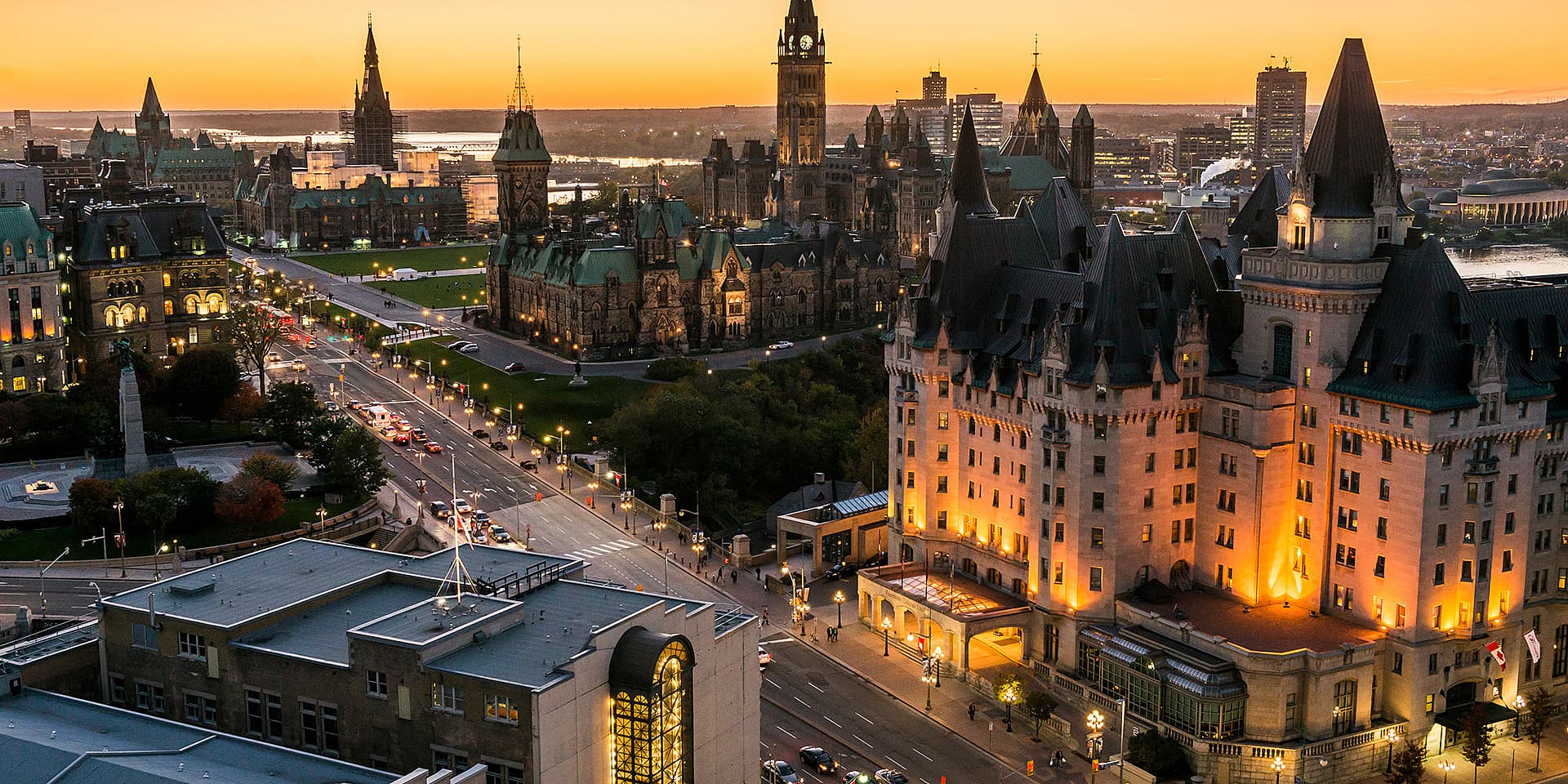
When people ask, "What is the capital of Canada?" - or even type "capital of canada canada" - the answer is straightforward: Ottawa. If you are scanning quick facts about canada or a fact file about canada, remember that the canada country capital city (the canada country capital) is Ottawa. But the reason this question comes up so often is that many people naturally assume the capital must be Toronto, Vancouver, or even Montreal, since those cities are more widely known internationally. Ottawa, by contrast, is quieter, more administrative, and less flashy. Yet that is exactly part of the reason it works so well as Canada's capital.
Ottawa is not just the city where Parliament sits. It is the political centre of the country, the home of many national institutions, and a place that reflects Canada's history, bilingual identity, and style of government. Once you look beyond the simple trivia answer, Ottawa becomes much more interesting.
Why Ottawa is the capital of Canada
In terms of canada country history, Ottawa became the capital of the Province of Canada in 1857, when Queen Victoria selected it over other contenders such as Toronto, Montreal, Kingston, and Quebec City. At the time, choosing a capital was not a simple matter of picking the largest or richest city. There were serious practical and political considerations.
One reason Ottawa stood out was geography. It sat on the border between what are now Ontario and Quebec, which made it a symbolically balanced choice between English-speaking and French-speaking populations. That mattered deeply in a country already shaped by linguistic and cultural duality. Ottawa was also farther inland than cities like Montreal, which made it less vulnerable to attack from the United States in an era when border security was taken very seriously. At the same time, it was still accessible by river and rail, making government administration feasible.
In other words, Ottawa was chosen not because it was the biggest city, but because it was seen as a strategic compromise. It represented stability, balance, and neutrality. In many ways, that logic still fits modern Canada surprisingly well.
Where Ottawa is located
Ottawa is in eastern Ontario, on the south bank of the Ottawa River. Across that river sits Gatineau, in Quebec. Together, the two cities form the core of the National Capital Region. This location gives Ottawa a unique feel. It is physically in Ontario, but it is deeply connected to Quebec in everyday life, governance, and culture.
That matters because Canada is not only a large country, but also a country built on regional diversity. Having the capital near the Ontario-Quebec boundary helps reinforce the idea that national government belongs to the whole country, not just one linguistic or regional bloc.
For visitors, this geography is also quite distinctive. It is one of the few capital regions where crossing into another province can be part of the normal rhythm of daily life. You can have lunch in Ottawa, cross a bridge, and be in Gatineau minutes later.
Where is canada located on the world map? Canada is situated in the northern part of North America, bordered by the United States by land; across water, countries close to canada include Denmark (via Greenland) and France (via Saint Pierre and Miquelon). It is not a continent - so if you are asking "is canada a continent?" the answer is no; Canada is a country in North America. In short: where is canada situated? On a world map (canada country in world map), it spans the Atlantic to the Pacific and reaches into the Arctic.
Why many people confuse Ottawa with Toronto
Toronto is the largest city in Canada and the economic centre of the country. It has a bigger global profile, a larger population, and much more international business visibility. That leads many people to assume Toronto must be the capital. A common myth - "toronto is the capital of canada" - persists, but it is incorrect.
This confusion is not unusual. Around the world, people often assume the biggest city is the capital, but that is not always how countries are organized. In Canada's case, Toronto is the capital of Ontario, while Ottawa is the capital of Canada. For clarity, the canada capital name (canada capital city name) is Ottawa.
The distinction becomes easier once you think of the layers clearly. Canada is the country. Ontario is one of its provinces. Ottawa leads the country politically. Toronto leads Ontario provincially and plays a much larger role economically and commercially.
That split actually says something important about Canada. Political power and economic gravity do not sit in exactly the same place. Ottawa was not designed to be the loudest city in the country. It was designed to be the seat of national government.
What makes a capital city a capital
A capital city is usually where a country's central government operates. In Ottawa, that includes Parliament Hill, the offices of the Prime Minister, Rideau Hall, the Supreme Court of Canada, and many federal departments and agencies. Foreign embassies are there. National ceremonies happen there. Key political decisions are made there.
So while Ottawa may not dominate entertainment headlines, it performs the functions that define a capital city in a very direct way. If you want to understand Canadian politics, public administration, federal policy, diplomacy, or constitutional life, Ottawa is the place where all of those threads come together.
It is also a city that feels designed around institutions. Government buildings, museums, monuments, ceremonial spaces, and public architecture shape much of its identity. In some capitals, that can feel heavy or rigid. In Ottawa, it is usually softened by green space, waterways, and a calmer urban rhythm.
A city shaped by history
Before Ottawa became the capital, it was known as Bytown, named after Colonel John By, who oversaw construction of the Rideau Canal in the early nineteenth century. The canal was originally built for military purposes, intended to create a safer transportation route between Montreal and Kingston after the War of 1812.
That piece of infrastructure ended up shaping the city's early development. What began as a rough lumber and canal town gradually evolved into a political centre. Ottawa officially became a city in 1855, just before Queen Victoria chose it as the capital.
Its early reputation was not glamorous. It was remote by the standards of the time, muddy, and tied to frontier industry. But over time, that rough edge was replaced by public institutions, ceremonial spaces, and a stronger national role. The result is a capital city that grew into its purpose rather than being built from the start as a grand imperial seat. If you are exploring canada country history, Ottawa's past helps explain that national evolution.
That history gives Ottawa a different personality from capitals like Paris or London. It feels less theatrical and more functional, which in many ways aligns closely with how Canada often sees itself.
Parliament Hill and the heart of Canadian politics
When most people picture Ottawa, they picture Parliament Hill. It is the symbolic and political heart of the country. The Gothic Revival buildings overlooking the Ottawa River are among the most recognizable images in Canada. This is where the House of Commons and the Senate meet, where federal laws are debated, and where national ceremonies often take place.
Parliament Hill is also more than a workplace for politicians. It functions as a civic symbol. Major events, protests, celebrations, and moments of mourning often centre there. On Canada Day, it becomes one of the most visible public gathering spaces in the country. At other times, it reflects political tension, public engagement, and the democratic process itself.
The Peace Tower, the Centennial Flame, and the surrounding buildings carry enormous symbolic weight. Even for people who are not particularly interested in politics, standing on Parliament Hill tends to make the idea of Canada feel more real and more institutional.
Ottawa and Canada's bilingual identity
One of Ottawa's most important features is how strongly it reflects Canada's bilingual character. English and French both play a visible role in the city. Federal institutions operate in both official languages, and the proximity to Quebec strengthens that dynamic in everyday life.
This does not mean Ottawa is perfectly balanced in every neighbourhood or every social setting, but it does mean the city embodies one of the country's foundational ideas better than many other places could. In practical terms, bilingual signage, federal services, and cross-provincial interaction are part of the city's fabric.
For newcomers trying to understand Canada, Ottawa offers a useful window into how the country sees itself: not simply as one culture with a translated version attached, but as a federation that has long had to navigate coexistence, compromise, and shared institutions across linguistic lines.
More than politics: what Ottawa is like as a city
It would be a mistake to think Ottawa is only government offices and official ceremonies. It is also a livable, attractive city with distinct neighbourhoods, a strong public sector workforce, growing tech activity, universities, festivals, and a high quality of life that many residents appreciate.
The Rideau Canal runs through the city and becomes one of its most famous features in winter, when parts of it serve as a giant skating rink. In warmer months, it adds beauty and recreational value. The city is also known for green space, bike paths, and access to nature compared with many other capitals.
Ottawa has major cultural institutions as well, including the National Gallery of Canada, the Canadian Museum of History across the river in Gatineau, and several other museums that help tell the story of the country. These places are not random additions. In a capital city, museums carry national meaning. They help define what a country chooses to remember, preserve, and present.
There is also a certain calmness to Ottawa. Some people find that appealing. Others find it less exciting than Toronto or Montreal. Both reactions are understandable. Ottawa is not usually trying to be Canada's most dynamic city in a pop-cultural sense. It is trying to function well as a national capital.
Top attractions in Canada's capital
For first-time visitors, Ottawa offers a strong mix of politics, history, architecture, and scenery. Parliament Hill is usually the starting point, but not the only highlight. The Rideau Canal, especially in winter, is iconic. The ByWard Market offers a more casual and lively side of the city, with restaurants, shops, and local character. Rideau Hall, the residence of the Governor General, adds another layer of constitutional significance.
Museums are a major draw as well. The National Gallery stands out architecturally and artistically, while the Canadian Museum of History gives visitors a broader national story and one of the best views back across the river toward Parliament. For people interested in military, aviation, science, or nature, Ottawa also has impressive specialized museums.
What makes these attractions work together is that they are not disconnected tourist stops. In Ottawa, many of them are directly tied to the country's story. The city feels educational without being dry.
Why Ottawa still makes sense today
Some capitals lose relevance over time, especially if economic and cultural power shifts elsewhere. Ottawa has not really faced that problem. It still makes sense as Canada's capital because the original reasoning behind the choice still holds up.
It remains politically neutral relative to larger provincial power centres. It still sits close to the Ontario-Quebec divide that matters so much historically and institutionally. It continues to reflect bilingual governance. It is secure, stable, and organized around public institutions rather than private dominance.
There is also something fitting about Ottawa for Canada specifically. Canada often projects an identity built around moderation, procedure, pluralism, and administrative competence. Ottawa, as a city, mirrors that. It may not overwhelm visitors with spectacle, but it represents the country's political temperament rather well.
Common questions about the capital of Canada
A common question is whether Toronto was ever the capital of Canada. The answer depends on the period you mean. Before Confederation, several cities served as the seat of government for the united Province of Canada at different times, including Toronto and Montreal. But for modern Canada as a confederated nation, Ottawa is the established capital. This also helps with search queries like "capital to canada" or "capital canadian" - both point to Ottawa.
Another common question is whether Ottawa is a good city to visit even if someone is not interested in politics. The answer is yes. Its museums, waterways, architecture, public spaces, and seasonal experiences make it worthwhile even for people who have little interest in legislative affairs.
People also often ask why Vancouver is not the capital, especially since it is one of Canada's most internationally recognized cities. The answer is simple: capitals are not chosen purely by fame, beauty, or economic energy. They are chosen for historical, political, and geographic reasons. Ottawa fit those reasons better than any western city ever did.
Quick facts about Canada (context for Ottawa)
- canada country population: about 40 million - if you are wondering "what is population canada?" that is a good current approximation.
- when was canada founded, and how old is canada the country? Canada's Confederation date is July 1, 1867, making it well over 150 years old.
- how big in canada? It is the world's second-largest country by area, about 9.98 million square kilometres.
- is canada a country in north america / is canada north america? Yes - Canada is a sovereign country in North America, not a continent. This clarifies statements like "canada is part of america": geographically, it is part of North America but it is a separate country from the United States.
- countries that border canada: the United States by land; across water, countries close to canada include Denmark (Greenland) and France (Saint Pierre and Miquelon).
- On a world map (canada country in world map), Canada stretches across the top of the continent from the Atlantic to the Pacific and into the Arctic.
- People sometimes type "capital 0f canada" or even "capital of canada capital of canada" - and in Spanish you may see "canada capital" - all of which refer to the same answer: Ottawa.
For readers researching Canada more broadly, Careviv also has a practical guide to moving to Canada from the UK.
Final thoughts
So yes, the capital of Canada is Ottawa. But reducing Ottawa to a quiz answer misses the bigger picture.
Ottawa matters because it tells you something about Canada itself. It shows how the country balances regions, languages, and institutions. It reflects a preference for compromise over dominance and public administration over spectacle. It is a city where history, politics, and national identity all meet in a fairly understated way.
That understated quality is part of its charm. Ottawa does not need to compete with Toronto's skyline, Montreal's cultural energy, or Vancouver's natural drama to justify its role. It serves a different purpose. It is where the country governs itself, represents itself, and, in many ways, explains itself.
For anyone learning about Canada, understanding why Ottawa is the capital is more useful than simply memorizing the name. Once you understand that choice, you start to understand the country a bit better too.


